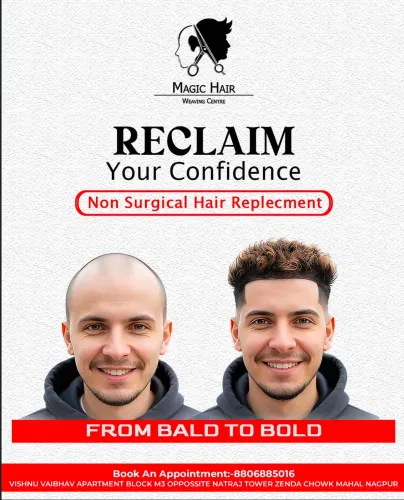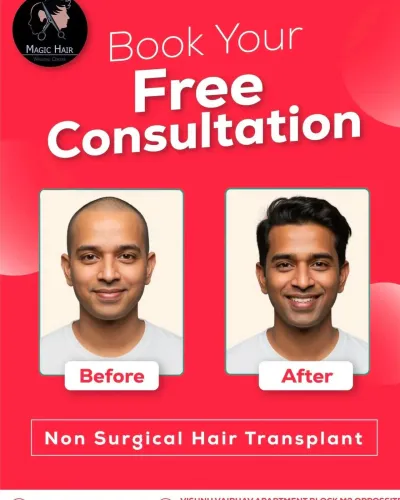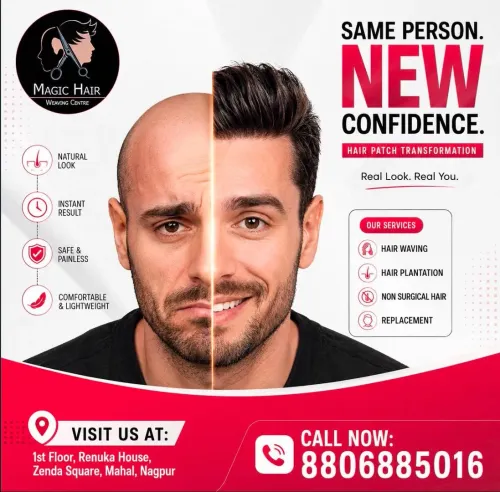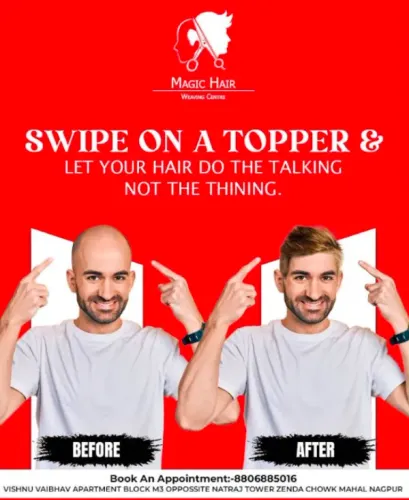
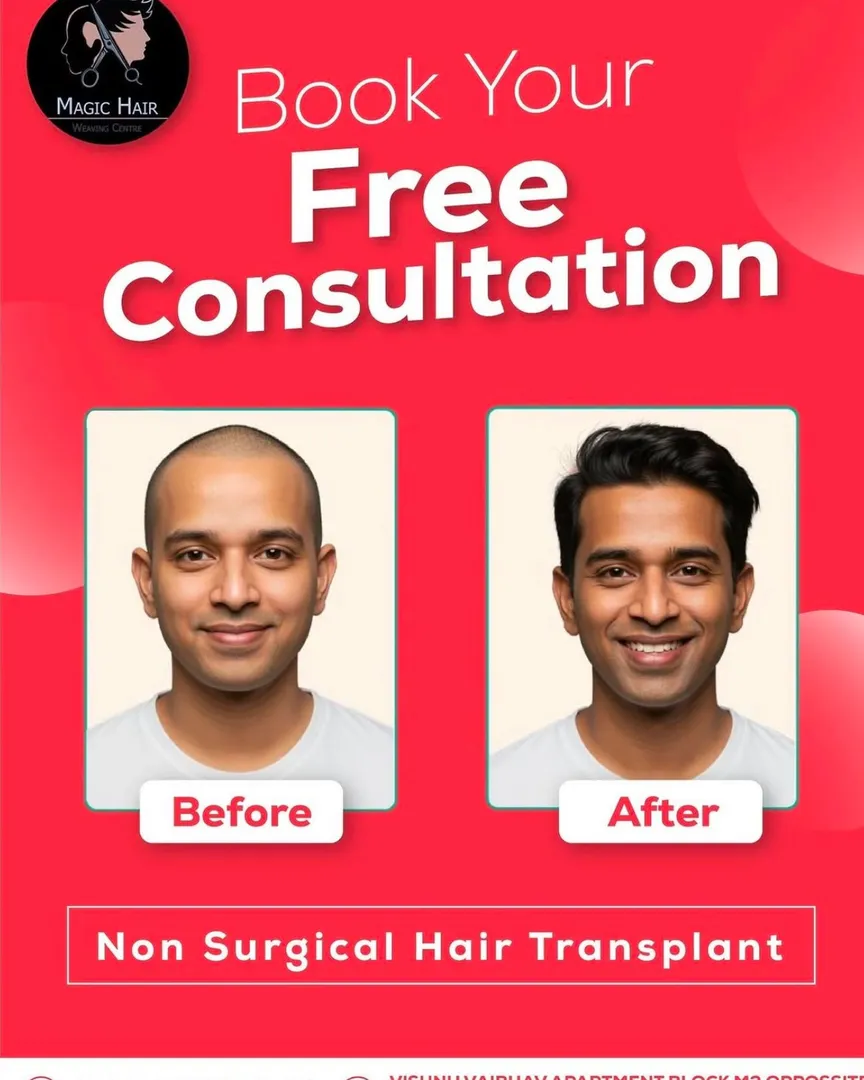
When people explore natural hair bonding, their biggest concern is often straightforward will other people notice?
A realistic result depends on much more than simply using good-quality hair. Hairline design, density, texture, colour, placement, blending, plus styling all contribute to the finished appearance.
Understanding these elements makes it easier to evaluate a hair system before committing to one.
A natural hairline should suit the person
The frontal hairline receives considerable visual attention because it frames the face.
An unrealistic hairline may sit too low, appear too straight, or contain excessive density at the front. Natural hairlines generally have subtle variation.
Age also matters. A hairline that might look appropriate on a younger adult may appear less convincing on someone older.
The objective should be facial compatibility rather than copying a standard template.
Density needs restraint
More hair does not automatically mean a better-looking system.
If a person has relatively fine natural hair around the sides, an extremely dense bonded system on top may create an obvious contrast.
Natural-looking bonding usually requires enough density to provide coverage without appearing disproportionately thick.
This is one area where subtlety can make a significant difference.
Texture matching is essential
Hair can be
- Straight
- Slightly wavy
- Deeply wavy
- Curly
- Fine
- Medium
- Coarse
Replacement hair that behaves differently from the surrounding natural hair can become difficult to blend.
Texture should therefore be evaluated before the system is prepared. Styling can refine the final appearance, but choosing an appropriate starting texture usually creates a better foundation.
Colour involves more than choosing black or brown
Natural hair colour contains variations.
Even two people who describe their hair as black may have different tones. Exposure to sunlight, age, previous colouring, plus individual hair characteristics can alter appearance.
The replacement system should be viewed alongside existing hair under suitable lighting whenever possible.
For people with greying hair, incorporating an appropriate proportion of grey strands may produce a more realistic transition than using a uniformly dark system.
Direction matters when hair moves
Hair does not simply emerge vertically from the scalp. It follows different directions depending on the area.
The way replacement strands are positioned affects parting, movement, styling, plus hairline appearance.
This becomes especially relevant when the wearer prefers hairstyles that expose the front or create a defined part.
The haircut completes the illusion
A hair system can have suitable colour plus texture yet still look disconnected until it is properly cut into the surrounding natural hair.
Blending should consider
- Side length
- Back length
- Overall volume
- Preferred parting
- Face shape
- Styling routine
The final haircut helps the replacement area become part of one complete hairstyle.
Maintenance protects the finished appearance
Even a well-matched system can lose its polished look when maintenance is neglected.
Product buildup, scalp oil, perspiration, tangling, dryness, plus natural hair growth can gradually affect appearance.
Regular care helps keep the system clean plus manageable while allowing the fit to be checked periodically.
In Nagpur, where hot weather can increase perspiration, maintenance habits deserve particular attention.
Realism comes from personalization
There is no universal specification for natural-looking hair bonding.
Someone with short, straight hair requires a different approach from someone with longer, wavy hair. A person with extensive baldness may also need different coverage from someone dealing with localized thinning.
Magic Hair Weaving Centre in Nagpur considers characteristics such as coverage, colour, density, texture, plus preferred styling when discussing non-surgical hair replacement.
A convincing result is usually created through several small decisions working together. Rather than pursuing maximum thickness, the better objective is a system that looks proportionate to the person's natural features.
Keywords